
Choosing the Right Retail POS for Business Growth
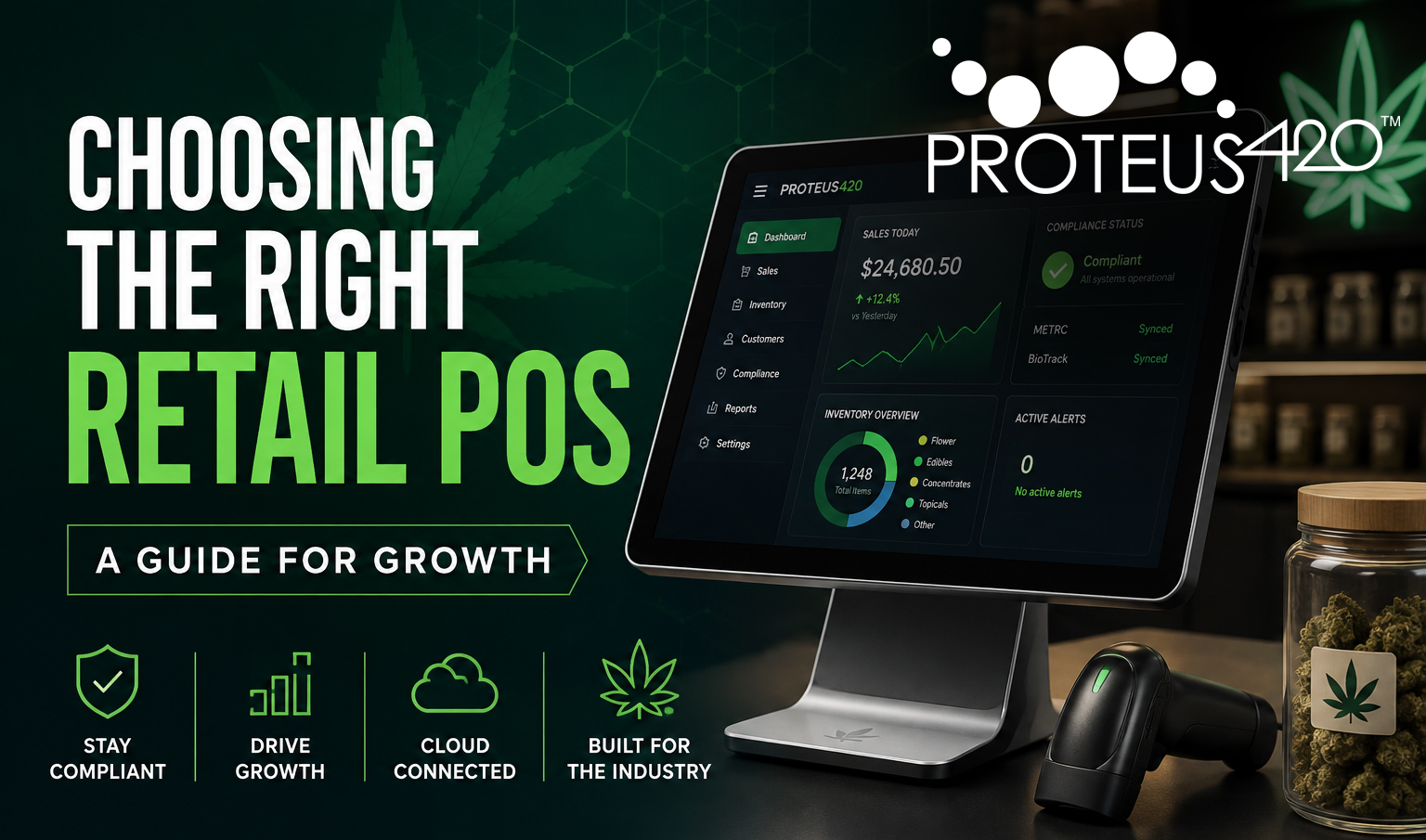
Did you know that 82% of retail operators plan to replace their traditional cash registers with cloud-connected systems within the next two years? You already know that in a highly regulated market, your point-of-sale system is much more than a tool for processing payments. It's the heartbeat of your operation, the keeper of your inventory, and your first line of defense against compliance risks. Making the right POS choice for your business is about finding a solution that transcends simple transactions to become your primary growth engine.
We understand the frustration of software that refuses to talk to METRC or BioTrack, leading to manual data entry errors that jeopardize your license. You deserve a single source of truth that provides real-time visibility across every location you manage. This guide will show you how to select a system that automates regulatory reporting and creates a seamless customer experience from your mobile app to the checkout counter. Together, we'll explore how to plant the seeds for a scalable enterprise through data intelligence, robust integration, and total operational control.
Key Takeaways
- Understand how to bridge the "Compliance Gap" by treating your point-of-sale as a command center rather than a simple checkout tool.
- Discover why making the right POS choice for your business requires a rigorous audit of operational bottlenecks and a commitment to batch-level inventory tracking.
- Learn to identify and dismantle "Frankenstein Software" by replacing disconnected applications with a unified ERP ecosystem for total data integrity.
- Explore the essential features of a high-performance system, from integrated CRM and loyalty programs to automated regulatory reporting.
- Identify the strategic advantages of an integrated ERP model, including how fractional operations can help you scale with stability and ease.
Table of Contents
- Beyond the Checkout: Why Your POS Choice Is a Compliance Command Center
- Key Features That Define a High-Performance Regulated POS
- Integration vs. Ecosystem: Solving the 'Frankenstein Software' Problem
- The Decision Matrix: 5 Steps to Making the Right POS Choice
- Future-Proofing with PROTEUS420: The Power of an Integrated ERP
Beyond the Checkout: Why Your POS Choice Is a Compliance Command Center
In a regulated environment, your terminal is far more than a tool for swiping cards. It's the primary data entry point for every regulatory requirement your business must satisfy. Every transaction, return, or inventory adjustment is a signal sent to state monitors. If your software treats these as simple retail events, you're operating with a dangerous blind spot. Making the right POS choice for your business means selecting a system that acts as a compliance shield, protecting your hard-earned license from the ground up.
Many operators fall into the "Compliance Gap," a precarious space where general retail software fails to meet the specific needs of seed-to-sale tracking. These systems weren't built for the high-stakes world of METRC or BioTrack. When your software doesn't speak the language of regulators, you're forced into manual reporting. This leads to a cascade of risks: manual data entry errors, inventory discrepancies, and the constant threat of audits. In this industry, a simple typo isn't just a mistake; it's a liability that can result in heavy fines or total license loss. Building "Regulatory Resilience" through automated software ensures that compliance happens in the background, allowing you to focus on growth instead of paperwork.
The True Cost of a 'Standard' Retail POS
A basic Point of sale (POS) system might seem cost-effective initially, but the hidden expenses of "Frankenstein" integrations add up quickly. You'll often find yourself paying for expensive third-party plugins or data bridges just to get your sales to sync with state databases. These disconnected systems frequently suffer from sync errors, leading to operational downtime that halts your sales entirely. In 2026, Compliance Risk is defined as the probability that operational errors or software failures will lead to regulatory penalties, financial loss, or the revocation of a business license. Don't let a "standard" tool become your biggest expense.
Why Real-Time Reporting Is Non-Negotiable
Waiting until the end of the day to sync your data is a strategy rooted in the past. Real-time integration with METRC or BioTrack is the only way to ensure your physical inventory matches your digital records at every moment. This immediate feedback loop prevents discrepancies before they happen, catching errors while the customer is still at the counter. When you implement a system that demands accuracy at the terminal, you build a culture of compliance that empowers your staff. It provides the stability and control needed to manage multiple locations with total confidence. Success in this industry is built on a foundation of data integrity, and that foundation starts with making the right POS choice for your business.
Key Features That Define a High-Performance Regulated POS
Precision. Stability. Control. These aren't just buzzwords; they're the pillars of a successful retail operation. High-performance systems do more than record sales. They manage the complex lifecycle of your products with surgical accuracy. When you're making the right POS choice for your business, you're not just buying software; you're investing in a scalable partner that grows alongside you. You need a system that offers granular control over every gram, every cent, and every customer interaction.
Comprehensive inventory management with batch and lot tracking is the bedrock of quality control. It allows you to trace a product from the shelf back to its origin in seconds. This level of detail isn't just for passing audits; it's for protecting your brand's reputation. Integrated CRM and loyalty programs further strengthen your foundation by turning one-time shoppers into lifelong advocates. By tracking purchase history and preferences, you can nurture relationships with personalized offers that actually resonate. Additionally, with over 65% of in-person transactions now being contactless, having advanced cash management and secure payment processing is essential for modern legitimacy. Your system should also offer mobile-first capabilities to empower your team to handle delivery and curbside operations with the same efficiency as in-store sales.
Data Intelligence and Smart AI Analytics
Stop looking at what happened and start seeing what will happen. Predictive AI analytics identify sales trends and peak hours before they occur. This allows you to optimize staffing levels and inventory stock, ensuring you never miss a sale or overspend on labor. Smart AI acts as a digital consultant, helping you reduce shrinkage by highlighting discrepancies in real-time. When making the right POS choice for your business, look for tools that transform raw data into actionable intelligence. Choosing the right POS system requires a deep dive into how these analytical features integrate with your specific workflow to drive profitability.
Omnichannel Capabilities: From App to Counter
Modern retail happens everywhere. A dedicated customer mobile application bridges the gap between digital browsing and physical checkout. With seamless e-commerce integration, your online menu stays in perfect sync with your shelf stock. This creates a consistent brand experience that builds trust. It ensures that whether a customer is on their couch or at your counter, they receive the same high level of service. If you're ready to see how these features work in a unified environment, explore a fully integrated retail solution designed for long-term growth.
Integration vs. Ecosystem: Solving the 'Frankenstein Software' Problem
Many operators unknowingly build their businesses on a shaky foundation of "Frankenstein Software." This is a collection of disconnected apps, separate spreadsheets, and third-party plugins held together by unstable APIs. It's a reactive way to manage a business that demands proactive control. While each individual tool might claim to solve a specific problem, the lack of communication between them creates a fragmented view of your operation. Making the right POS choice for your business requires looking past the terminal to see how that data flows through your entire enterprise.
The alternative is a unified ERP ecosystem. Unlike a standalone POS that only sees the final transaction, an integrated ecosystem centralizes data from every corner of your business. This is vital for multi-state or multi-vertical operators who need real-time visibility across different locations and departments. By consolidating your tech stack, you eliminate the "technology tax." You stop paying for multiple, redundant subscriptions that don't talk to each other. Instead, you gain a single source of truth that provides the reassurance, stability, and clarity needed to scale with confidence.
The Power of Vertical Integration
True operational efficiency happens when you connect cultivation, manufacturing, and retail within a single dashboard. This vertical integration allows you to track the "Cost of Goods Sold" (COGS) from the very first seed to the final sale at the counter. It automates the complex transfers between distribution hubs and retail storefronts, removing the friction of manual data entry. When your software understands the entire lifecycle of the product, you can nurture your growth with precision and ease.
Streamlining the Back Office
Growth is often stifled by the weight of manual bookkeeping. Integrated accounting and payroll solutions reduce this burden, allowing you to focus on strategy rather than spreadsheets. Centralizing employee management and access controls ensures that your data remains secure as you expand your team. By maintaining data integrity across the entire supply chain, you protect your business from the errors that lead to audits. Making the right POS choice for your business means choosing a platform that handles the granular details of daily management while supporting your big-picture vision.

The Decision Matrix: 5 Steps to Making the Right POS Choice
Selecting a platform for your retail operation is a high-stakes decision that dictates your trajectory for years to come. It's the difference between a system that serves as a constant bottleneck and one that acts as a silent partner in your success. Making the right POS choice for your business requires a disciplined approach that looks beyond the user interface to the underlying logic of the software. You need a framework that prioritizes data integrity, regulatory safety, and operational ease.
Follow this five-step matrix to ensure your selection supports a scalable enterprise:
- Step 1: Audit your current bottlenecks. Every operation has friction points where data gets lost or manual entry takes over. Identify these gaps early so you can choose a system that heals these wounds rather than hiding them.
- Step 2: Evaluate the depth of regulatory integrations. It isn't enough to see a METRC or BioTrack logo. You must verify how the software handles state-specific nuances and real-time reporting to ensure you remain within the lines of the law.
- Step 3: Test for multi-location scalability. If your goal is growth, your software must provide a unified view of all inventory, sales, and staff from a single login. Disconnected data is the enemy of expansion.
- Step 4: Assess industry expertise. Seek out a provider with a proven track record. You're looking for a partner that has navigated the industry's volatility and understands the unique pressures you face every day.
- Step 5: Calculate Long-Term Value (LTV). Look past the initial setup fees. A cheaper system that leads to a single compliance fine or a day of downtime is far more expensive than a robust ERP that keeps your license secure.
Evaluating the Vendor’s Industry Pedigree
Longevity provides a level of reassurance that new entries simply can't match. In a regulated space that has seen massive market shifts since 2008, you need a veteran guide who has survived every regulatory wave. Ask potential partners how they handle state-specific compliance updates and how quickly they pivot when laws change. You aren't just buying a license; you're entering a partnership. Choose a team that has the wisdom to help you navigate pitfalls before you even see them.
The Hardware vs. Software Balance
Hardware lock-in is a common trap that limits your flexibility. While you need durable, industry-appropriate hardware that can withstand the rigors of a busy retail environment, your software should remain agnostic. This allows you to upgrade your tech as needed without a total system overhaul. Planning for future upgrades ensures that your terminal stays at the cutting edge without tethering you to a single manufacturer's ecosystem. Total control means having the freedom to choose the tools that fit your specific workflow.
Ready to see a system built by industry veterans who have your back? Explore our integrated retail solutions and discover how we can help you build a more resilient business.
Future-Proofing with PROTEUS420: The Power of an Integrated ERP
Success in a regulated market demands more than just a checkout tool. It requires a robust foundation that can withstand the pressures of shifting laws and rising competition. PROTEUS420 stands as the industry's most comprehensive ERP, designed to unify every aspect of your operation. By centralizing your retail, cultivation, and distribution data, we provide the innovative stability you need to lead with confidence. Making the right POS choice for your business is ultimately a decision about your future. You deserve a partner that offers both the discipline of a veteran and the agility of a tech leader.
One of our most powerful tools for expansion is the 'Fractional Operations' model. This unique approach allows scaling businesses to access high-level operational expertise without the overhead of full-time executive hires. It provides the support you need to nurture your growth while maintaining lean, efficient teams. Combined with our smart AI, you gain the ability to stay ahead of market trends through predictive intelligence. Our platform doesn't just report history; it helps you write it. Since 2008, we've served as a reliable guide for entrepreneurs, ensuring their systems are secure, compliant, and built for longevity.
Scalability for Enterprise Operators
Managing high-volume retail requires precision that basic software cannot provide. PROTEUS420 was built to grow alongside you, whether you're managing a single boutique storefront or a sprawling national footprint. Our ecosystem handles the complexities of multi-vertical operations by syncing data across cultivation, manufacturing, and retail in real-time. This ensures that as you plant new seeds of expansion, your operational core remains robust and legitimate. You gain total control over your supply chain, inventory, and staff performance from one centralized dashboard.
Taking the Next Step Toward Operational Excellence
True operational excellence is a journey, and you don't have to walk it alone. We invite you to see our ecosystem in action and discover how a unified ERP can transform your daily management. Our team is here to provide the supportive partnership and professional weight your enterprise deserves. We understand the high stakes of this industry, and we've built our reputation on the philosophy that we've got your back. It's time to move from operational struggle to streamlined success by making the right POS choice for your business today.
Ready to secure your legacy? Schedule a strategy session with the PROTEUS420 team to explore a solution tailored to your growth goals.
Securing Your Operational Future
Your terminal is the front door to your entire enterprise. We've explored how a robust POS acts as a compliance command center, shielding your license while providing the data intelligence needed for real-time control. By dismantling "Frankenstein" software and embracing a unified ecosystem, you eliminate the friction that stifles growth. Making the right POS choice for your business isn't just about today's transactions; it's about planting the seeds for a legacy that can withstand the rigors of a shifting industry.
You deserve a partner that brings stability, legitimacy, and ease to your daily management. Since 2008, we've helped operators navigate the complexities of this space with fully integrated METRC and BioTrack reporting alongside advanced AI-driven business intelligence. It's time to transition from operational struggle to streamlined success. Empower your business with the PROTEUS420 integrated ERP ecosystem and take total control of your trajectory. We're here to ensure your growth remains rooted in accuracy and excellence. We've got your back as you scale toward your next milestone.
Frequently Asked Questions
What is the difference between a standard retail POS and a regulated cannabis POS?
A regulated cannabis POS includes mandatory seed-to-sale tracking and automated reporting features that a standard retail POS lacks. While a standard system focuses on simple inventory and payments, a regulated version manages batch-level tracking to satisfy state requirements. This specialized software ensures that every milligram is accounted for from the moment it enters your shop until the final sale.
How does a POS system integrate with METRC or BioTrack?
Modern POS systems integrate with METRC or BioTrack through secure API connections that transmit sales data in real-time. Instead of manual end-of-day uploads, the software automatically pushes every transaction to the state database. This automation eliminates human error and ensures your physical inventory always matches what the regulators see on their screens.
Can I use my existing hardware with a new POS system?
You can often use existing hardware if the software is platform-agnostic; however, some legacy systems require proprietary terminals. It's best to check if your current scanners, printers, and tablets meet 2026 security standards like PCI DSS. Choosing a flexible provider allows you to avoid "hardware lock-in" and upgrade your technology at your own pace.
What are the most common mistakes when choosing a POS for a dispensary?
The most common mistake is prioritizing a low initial price over long-term compliance safety and operational scalability. Making the right POS choice for your business means avoiding "Frankenstein" software that relies on unstable third-party plugins. Operators often forget to audit their growth plans, leading to a system that fails as soon as they open a second location.
How does an integrated ERP improve my business intelligence?
An integrated ERP improves business intelligence by consolidating data from cultivation, manufacturing, and retail into a single source of truth. Advanced AI analytics can then identify sales trends, staff performance, and inventory shrinkage across your entire supply chain. This holistic view allows you to move from reactive management to proactive, data-driven strategy.
What should I look for in a POS system if I plan to scale to multiple states?
Look for a system that offers centralized data visibility and a robust compliance engine capable of handling varied state regulations. Making the right POS choice for your business involves selecting a partner that understands the nuances of different markets. Your software should allow you to manage multiple licenses under one dashboard while maintaining state-specific reporting logic.
Is cloud-based POS software secure enough for regulated industries?
Cloud-based POS software is highly secure and often superior to on-premise systems due to enterprise-grade encryption and automatic security patches. These platforms are built to comply with global standards such as PCI DSS and North America's 2026 payment security audits. They provide the reassurance that your sensitive business and customer data is protected against local hardware failures.
How long does it typically take to implement a new integrated POS system?
Implementing a new integrated POS system typically takes between two to four weeks, depending on the complexity of your data migration. This timeline includes cleaning your existing inventory records, setting up hardware, and training your staff on the new workflow. A methodical rollout ensures that your team feels confident and that your compliance reporting remains uninterrupted during the transition.