Integrated Cannabis Business Solutions: 2026 Guide
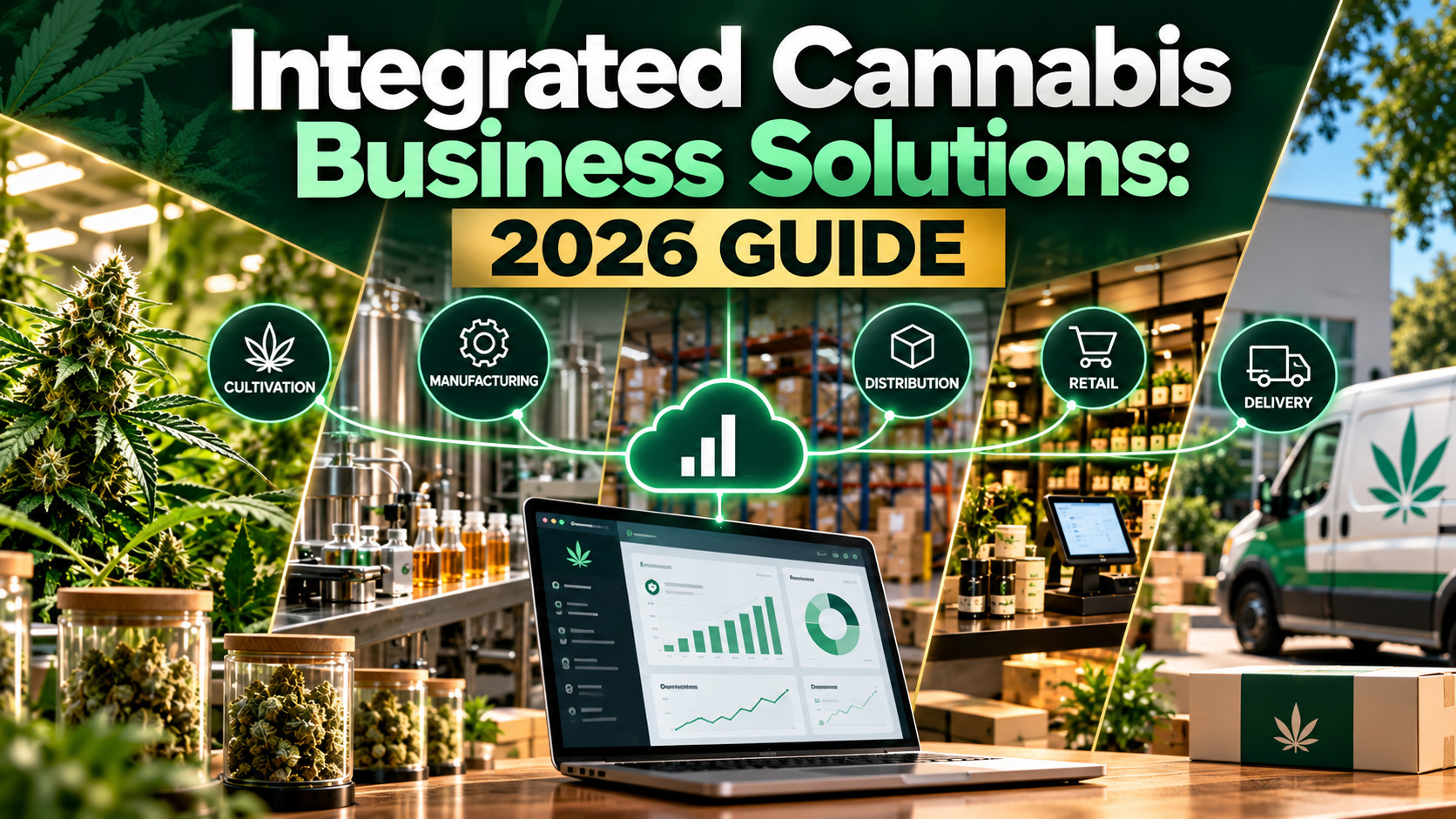
Integrated Cannabis Business Solutions: A 2026 Guide to Choosing the Right System
A platform can offer a long list of features and still leave your cannabis operation disconnected. The real test of integrated cannabis business solutions is whether information moves reliably between the workflows your team uses every day, from cultivation and manufacturing to distribution, retail, and delivery.
If staff re-enter the same details across systems or can’t get a clear view of activity across departments, adding another tool may create more work instead of less. Connected operations and useful data matter, but compliance integrations need careful evaluation, too. Software can support reporting workflows; it can’t guarantee that a business meets every legal requirement.
This guide explains how to assess integration in practice, compare platforms against your current workflows, and plan for implementation and future growth. Use the questions about data sharing, compliance connections, and operational visibility to distinguish a connected system from a collection of features and evaluate what fits your business today and as it expands.
Key Takeaways
- Assess integrated cannabis business solutions by how well they connect real workflows and data, not by how many modules appear on a feature list.
- Map where information should move across cultivation, manufacturing, distribution, retail, and delivery to spot gaps and duplicate work.
- Ask vendors to distinguish native modules from configured integrations and third-party connections, then confirm what each connection supports.
- Evaluate compliance integrations as tools for data exchange and workflow support, not as a guarantee of legal or regulatory compliance.
- Use a focused selection process: prioritize must-haves, test key workflows in demonstrations, and plan rollout around your operation’s needs.
Table of Contents
- What integrated cannabis business solutions connect across an operation
- How integrated cannabis business solutions connect data and compliance workflows
- How to compare integrated cannabis business solutions beyond feature lists
- A practical checklist for selecting an integrated cannabis platform
- How PROTEUS420 fits an integrated cannabis business evaluation
What integrated cannabis business solutions connect across an operation
Buying several modules from one vendor doesn’t automatically create a connected operation. Integrated cannabis business solutions link software and workflows so relevant information can move between teams, instead of leaving staff to re-enter details or reconcile separate records by hand.
Integration means connected data and processes that let an operational update inform the teams and systems that need it. A bundle of applications is not integrated simply because it shares a vendor or login. That distinction matters across an industry with different functions and handoffs. A cannabis industry overview can help frame how cultivators, producers, retailers, and supporting services fit into the broader business ecosystem.
What makes cannabis business software genuinely integrated?
Look beyond the product label. Ask whether systems share useful data and whether a change in one workflow can inform the next. For example, a retail sale might update relevant inventory information, while a fulfillment team uses the order details needed to prepare delivery. The exact data flow depends on platform capabilities, configuration, and your business’s processes.
Separate logins can coexist with strong integration, just as a single login can conceal disconnected systems. Ask a vendor to show how information travels, where staff still enter it manually, and how exceptions are handled. Integration depth varies, so verify which workflows are supported rather than assuming every module connects automatically.
Which teams and workflows can a connected platform support?
Think of the operation as a chain of distinct functions. Cultivation management supports growing operations; manufacturing and processing software addresses production workflows; distribution management connects movement through the supply chain; retail/POS supports store transactions; and delivery management supports fulfillment. A platform may connect some or all of these areas, but confirm coverage against your actual process.
Other business systems can extend that picture. CRM can support customer-related workflows, while accounting, eCommerce, payments, and analytics may help teams manage financial, online, transaction, and reporting needs. Their value depends on how well they exchange relevant information with operational systems, not just whether they appear on a feature list.
For instance, an order could begin through an online channel, appear in retail or fulfillment workflows, and inform inventory visibility. That connection may help teams work from more consistent information, but it doesn’t remove the need to check records or define responsibilities. Map the handoffs first. Then assess which connections would make them clearer and easier to manage.
How integrated cannabis business solutions connect data and compliance workflows
A connected system can give teams a more coherent view of activity, but its value depends on which information moves, when it moves, and who is responsible for reviewing it. In a seed-to-sale operation, a transaction or inventory update may matter to more than one team. The cannabis supply chain management framework helps illustrate why those handoffs matter, from sourcing and operations through transportation.
For example, a sale recorded at retail may affect inventory information used in internal reporting. Depending on the system’s design, related information may also be exchanged with an external compliance platform. That connection can reduce the need to reconcile separate records, but don’t assume every update transfers automatically or in real time. Ask the vendor to demonstrate the specific data path your team would use.
How shared operational data supports visibility
Consistent information can help managers compare inventory, transactions, and operational activity without assembling reports from disconnected sources. Dashboards and analytics can organize information for decision-making; they don’t predict outcomes or replace judgment. Before choosing a platform, confirm when data refreshes, which system is the source of truth, who can view or edit records, and whether changes can be traced through an audit trail.
What compliance integrations can and cannot do
State compliance platforms, including Metrc, are external systems. Requirements and workflows vary across jurisdictions, so an integration’s name alone doesn’t explain what it supports. Ask which data transfers, alerts, and reporting steps are included, whether staff must complete tasks in both systems, and how errors or failed transfers are surfaced. Confirm the supported scope for your operation before relying on a connection.
Software can support compliance workflows; it cannot guarantee compliance. Integrated cannabis business solutions may help organize data and reporting tasks, but operators remain accountable for verifying current rules, maintaining accurate records, and following required procedures. Software also isn’t legal advice. Consult qualified professionals when interpreting obligations.
During a vendor discussion, request a demonstration of a relevant workflow, ask how exceptions are handled, and confirm what your team must review manually. For an example of a platform that identifies Metrc among its integrations, see PROTEUS420’s cannabis software platform and verify current integration scope and workflow support directly.
How to compare integrated cannabis business solutions beyond feature lists
A feature checklist tells you what a vendor says its software can do. It doesn’t show whether the platform fits your workflows, how information moves between functions, or what your team will need to manage during rollout. Compare integrated cannabis business solutions against real operating needs, not the length of a product page. A system that supports one company’s processes may not suit yours.
Use a simple scorecard for each platform. Rate each criterion against a representative workflow and note what needs clarification:
- Workflow coverage: Which of your essential processes are supported from start to finish?
- Integration depth: Which records and updates pass between modules, and which require manual entry?
- Reporting: Can the right roles access useful, consistent information across business functions?
- Usability: Can employees complete routine tasks and resolve exceptions clearly?
- Scalability: Can the system accommodate the functions, users, or locations you may add?
Which evaluation criteria reveal real integration depth?
Ask vendors to define whether each capability is a native module, a configured integration, or a third-party connection. Then trace a representative record through the relevant workflows: does it update where expected, and what happens if data conflicts or a transfer fails? Check permissions, auditability, and reporting access across roles. Request a demonstration built around your processes, not a tour of isolated features.
Be precise about the word “integrated.” A shared login or common vendor doesn’t prove that records stay in sync. Ask which system owns each data point, how exceptions are flagged, and whether teams can see the information they need without relying on manual reconciliation.
How to assess implementation and adoption risk
A single platform can reduce the number of disconnected tools, but it won’t remove implementation work or business complexity. Before committing, identify process owners and the staff who will use the system. Clarify responsibilities for data migration, configuration, training, and ongoing support, as well as dependencies on outside systems. Review contract scope and change-management expectations directly with each vendor.
Keep comparisons grounded. Separate must-have workflows from future-phase needs, and record any assumptions the vendor makes about your setup. A gap may be manageable, but only if you understand its effect on daily work and who will address it. That clarity helps you choose a system your team can adopt and grow with, rather than one that only looks complete in a demonstration.

A practical checklist for selecting an integrated cannabis platform
A focused evaluation starts before the first vendor meeting. Document how work happens now, where information changes hands, and what your team needs to improve. This gives you a grounded way to assess integrated cannabis business solutions without treating every available module as essential.
What should operators document before comparing vendors?
Build a short operational brief with input from the people who own and use each process. Include:
- Business functions and systems: Record the teams involved, the software they use, and who makes purchasing and operational decisions.
- Handoffs and data issues: Note where staff re-enter information, records don’t match, or teams lack timely visibility.
- Reporting and compliance workflows: List the reports managers rely on and the compliance-related processes that appropriate staff or qualified professionals should review.
- Goals and measures: Define what you want to track, such as fewer duplicate entries or clearer cross-team reporting. Treat these as business goals, not results software can guarantee.
Then sort requirements into two groups: must-haves for current operations and capabilities that could support a later phase. This keeps the evaluation focused and helps prevent a broad feature set from distracting the team from its core needs.
What should a useful software demonstration prove?
Bring your operational brief to the demonstration and ask the vendor to walk through one representative process from start to finish. Watch how records move between relevant teams, what staff must do manually, and how the system handles an exception. Ask to see role-based permissions and a management report, not just the standard feature tour.
Have operational and compliance stakeholders score the demonstration against criteria agreed in advance. Record unanswered questions and request clear follow-up on:
- Which data can be migrated, who prepares it, and how its accuracy is checked.
- What configuration and staff training involve, and what support is included in the proposed scope.
- How reporting access and user permissions can be managed.
- Which integrations the solution depends on, who maintains them, and how changes or issues are communicated.
- What the contract covers, including implementation responsibilities and any assumptions about your workflows.
Finally, turn the selection into a rollout plan. Assign process owners, schedule training around team responsibilities, and agree on how you’ll review progress against the goals you documented. A deliberate rollout gives staff a clearer path to adoption and gives leadership a way to assess whether the system is addressing the intended needs.
For an example of a platform spanning multiple cannabis operations, review PROTEUS420’s platform coverage and confirm current module availability, integration scope, and implementation responsibilities with the provider.
How PROTEUS420 fits an integrated cannabis business evaluation
With an evaluation framework in place, PROTEUS420 is one platform to assess against your operation’s documented needs. The company describes its ERP platform as connecting retail/POS, cultivation, manufacturing and processing, distribution, and delivery. That breadth may matter to operators looking to connect several business functions, but it doesn’t mean every organization needs every module. Fit depends on the workflows you run and the connections those workflows require.
Which operational areas does PROTEUS420 bring together?
Start with the core operating areas. Consider whether the stated POS, cultivation, manufacturing, distribution, and delivery coverage aligns with your current processes and planned growth. Then review adjacent capabilities the company identifies, including CRM, accounting, eCommerce, payments, analytics, and smart AI. Confirm current availability and functionality directly with PROTEUS420, particularly where your decision depends on a specific integration or workflow.
PROTEUS420 also identifies METRC and BioTrack among its compliance integrations. Treat those as points to validate, not a conclusion about the exact data exchanged or procedures supported. Ask which modules share information, how they’re configured, and whether your required workflows are supported. A wide range of capabilities can provide options, but the right configuration should reflect your priorities rather than add complexity your team doesn’t need.
What to ask PROTEUS420 before taking the next step
Bring your workflow map and must-have list to the conversation. Ask which modules and integrations match your operating model, what data moves between them, and where staff must still take manual steps. Request a demonstration of a relevant end-to-end process, including any exceptions your team encounters. For compliance-related workflows, confirm integration scope and keep responsibility for verifying current requirements with your organization and qualified advisers.
Clarify practical details before moving forward: who handles data transition and configuration, what training and support are included, and who maintains integrations over time? Confirm implementation responsibilities and dependencies in the proposed scope. These answers help you compare the platform on more than its feature list and judge whether it can support your team’s work today while accommodating future needs.
Use the discussion to test fit, not to assume it. If the platform’s stated coverage aligns with your priorities, review PROTEUS420’s integrated platform and confirm current module availability, integration scope, and supported workflows with the company.
Build a system around the way your operation works
The right platform is more than a collection of modules. It should connect the workflows your team relies on, make relevant information easier to follow, and support clear decisions as your business develops. When comparing integrated cannabis business solutions, prioritize real workflow fit, confirm what data and compliance connections support, and plan for implementation and adoption.
PROTEUS420 offers a platform spanning POS, cultivation, manufacturing, distribution, and delivery, and lists integrations with METRC and BioTrack. Founded in 2008, the company provides an example to assess against your own requirements. Confirm current module availability, integration scope, and supported workflows directly, and remember that software supports compliance processes but doesn’t guarantee legal compliance.
Start with your documented priorities, then compare them with the platform’s coverage. Explore how PROTEUS420 can connect your cannabis operations.
Frequently Asked Questions
What are integrated cannabis business solutions?
Integrated cannabis business solutions connect software and workflows across functions such as retail, cultivation, manufacturing, distribution, and delivery. The goal is for relevant information to move between teams and systems, reducing duplicate entry and improving operational visibility. A group of modules from one vendor isn’t necessarily integrated. Ask how records are shared, which workflows connect, and where staff still need to enter or verify information manually.
How does an integrated cannabis ERP platform work?
An integrated cannabis ERP platform brings operational modules into a connected system, allowing information from one function to inform related workflows elsewhere. For example, transaction or inventory records may support management reporting and downstream operational tasks, depending on the platform’s design and configuration. Before choosing a system, ask which data is shared, how frequently it updates, who can access it, and how the platform handles errors or conflicting records.
Can one cannabis software platform manage retail, cultivation, and distribution?
Yes, a platform may support retail, cultivation, and distribution through connected modules, but available workflows vary by provider and configuration. PROTEUS420 describes its platform as spanning POS, cultivation, manufacturing, distribution, and delivery. Ask vendors to demonstrate the specific handoffs your operation needs, including where records are shared and where manual work remains. You don’t need every module if it doesn’t match your current or planned operations.
How do METRC and BioTrack integrations work with cannabis business software?
METRC and BioTrack integrations connect business software with external compliance systems to support data exchange or related reporting workflows. The exact information transferred, supported tasks, and setup can vary by integration and configuration. Ask a vendor to demonstrate the workflows relevant to your operation, explain how failed transfers or exceptions appear, and identify what staff must complete or verify in each system. Confirm current integration scope directly with the provider.
Does cannabis compliance software guarantee regulatory compliance?
No. Software can support recordkeeping, data exchange, and reporting workflows, but it can’t guarantee that a business complies with every applicable requirement. Operators remain responsible for accurate information, current procedures, and reviewing their obligations. Ask vendors what their tools automate or support, then confirm requirements with appropriate compliance professionals or legal advisers. Treat software as part of your operational process, not a replacement for accountability or legal advice.
What should I look for when choosing integrated cannabis business software?
Start with your workflows and business priorities, then compare how well each platform connects the functions you use. Evaluate workflow coverage, integration depth, reporting, usability, permissions, auditability, and scalability. Ask vendors to distinguish native modules from configured integrations and third-party connections. Request demonstrations based on your actual processes, and clarify data migration, training, implementation responsibilities, support, and integration maintenance before deciding.
How difficult is it to migrate to an integrated cannabis platform?
Migration difficulty depends on factors such as data quality, the number of systems involved, integration dependencies, and how much configuration your workflows require. Before committing, clarify who prepares and transfers data, how records will be checked, and which historical information can be migrated. Also agree on training, support, process owners, and rollout steps. Ask the vendor to identify assumptions and responsibilities so your team can plan the transition realistically.